
The Shift Already Happened. Most Brands Just Haven't Noticed Yet.
I've been building technology products for over 25 years. I've watched entire distribution channels appear, mature, and get replaced. Directories gave way to search engines. Search gave way to social. Now something bigger is happening.
People are skipping search results entirely.
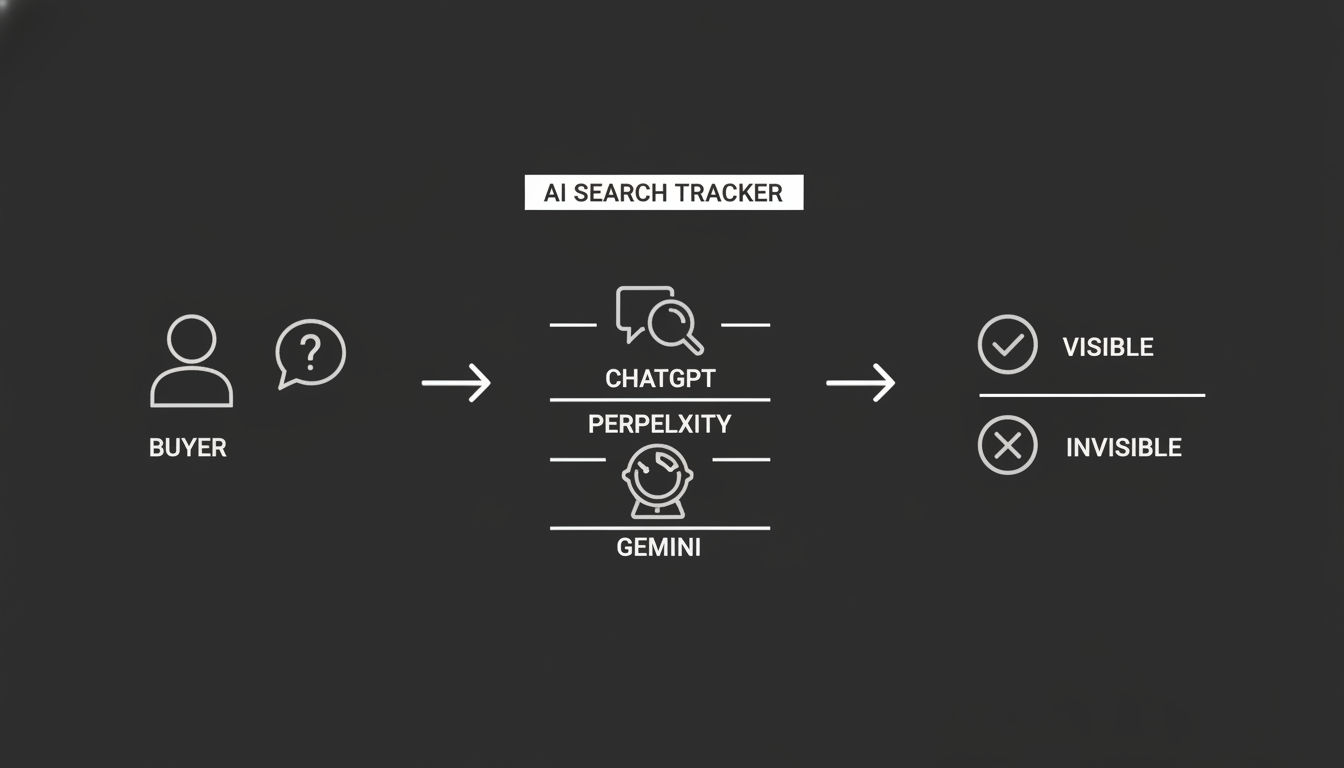
They're asking ChatGPT. They're asking Gemini, Perplexity, and whatever comes next. These AI assistants don't return ten blue links. They return a single synthesized answer that names specific brands, compares products, and makes recommendations.
If your brand is in that answer, you have visibility. If it's not, you don't exist in that conversation. There's no page two. No fold to fall below. You're either mentioned or you're invisible.
That's the shift. And until now, there was no way to measure it.
Why Can't I Just Check This Myself?
You can. Open ChatGPT and ask "What are the best tools for [your category]?" See if your brand shows up. That's one data point from one model at one moment in time.
Now do that across four AI engines and twenty different prompts, every week, for your brand and five competitors. Track whether mentions are going up or down. Note whether the AI understood your product correctly or described it wrong. Check if you were recommended or just named as an afterthought.
That's the actual job. Nobody can do it manually at any useful scale.
This is exactly why we built AI Search Tracker. It does this work automatically, across multiple AI models, using real buyer-intent prompts on a schedule you set. Then it shows you results in a way that helps you make decisions, not just fill a dashboard.
What Does AI Search Tracker Actually Do?
Let me be specific. Vague product descriptions waste everyone's time.
AI Search Tracker sends curated prompts to major AI assistants: Google AI, ChatGPT, and Perplexity Search. These aren't random questions. They're the kinds of things real buyers ask when they're comparing products or looking for recommendations in your category.
For each prompt, Akii captures the full response and analyzes it. We extract which brands were mentioned, how they were positioned, whether the recommendation was positive or negative, and whether the AI actually understood the product correctly. Then we do this repeatedly, on schedule, so you can see how things change over time.
The output is a cross-model visibility map. You see where you stand on each AI engine, how you compare to competitors, which prompts you dominate, and where you're completely absent.
That last part is usually the most valuable. The gaps you didn't know existed.
How Is This Different From What My SEO Tools Already Show Me?
It's measuring a completely different thing.
Traditional SEO tools track how you rank in Google's index. Keywords, backlinks, domain authority, position on a results page. That still matters. I'm not saying otherwise.
But AI assistants don't work that way. They don't crawl your site and rank it against a keyword. They build an understanding of your brand from everything they've been trained on and everything they can access, then synthesize that into a direct answer.
Your SEO tool can tell you that you rank third for "best project management software" on Google. What it can't tell you is whether ChatGPT recommends you when someone asks the same question. Those are two different visibility systems, and they don't always agree.
I've seen brands with strong Google rankings that AI models barely mention. I've also seen smaller brands that AI assistants recommend frequently because their content, reviews, and positioning are clear and consistent. AI Search Tracker measures the system that traditional tools can't see. It's not a replacement for SEO. It's the other half of visibility that nobody was tracking.
What Does the Setup Actually Look Like?
Simplicity matters here. If a tool is complicated to set up, people won't use it. We designed this to be straightforward.
Step 1: Configure Your Campaign
Pick your brand, enter your primary topic and top keywords, and select which AI engines to track: Google AI, ChatGPT, Perplexity, or all of them. Then choose a run schedule, weekly or monthly.
That's the whole configuration.
Step 2: Review Your Prompts
Akii generates twenty buyer-focused prompts based on your brand and keywords. These are the questions it will ask the AI models on your behalf. You can edit them, remove the ones that aren't relevant, or generate new ones. The goal is making sure the prompts match what your actual buyers are asking.
Step 3: Launch
Review your campaign summary and click launch. Akii runs automatically from there, collecting results on the schedule you set. No API keys to configure. No complex integrations. You go from setup to data in minutes.
What Will I Actually Learn From the Results?
This is where most people are surprised by what they find.
Which AI engines know you best
AI models don't behave the same way. ChatGPT might recommend your brand frequently while Google AI barely mentions you. Perplexity might describe your product accurately while another model gets it completely wrong.
These differences matter. If one engine is driving big buyer traffic and it doesn't understand your brand, that's a problem worth knowing about.
Where your competitors are winning
AI Search Tracker doesn't just show your performance. It shows which competitors are being recommended in your category, which prompts they dominate, and where they appear that you don't. This is competitive intelligence that didn't exist before. You can see exactly which brands the AI models prefer for specific types of questions.
Whether AI models understand your product correctly
This one is underrated. I've seen AI assistants describe products with outdated information, wrong pricing, or confused positioning. If an AI model is telling potential buyers something inaccurate about your product, you need to know. And you need to know which model is doing it.
How your visibility is trending
A single snapshot is useful. A trend line is powerful. If your visibility drops after a site migration, you'll see it. If a content update causes Perplexity to start recommending you more, you'll see that too. Trend data turns this from a report into an early warning system.
Who Gets the Most Value From This?
I'll be direct. Every brand that cares about being found online should be tracking this. But some teams will feel the impact faster than others.
Marketing leaders who need to understand competitive positioning in a world where AI is shaping buyer perception before anyone visits a website.
SEO teams who are already doing great work on traditional search but have a blind spot on AI visibility. This fills that gap immediately.
Agencies looking for a new service to offer clients. AI visibility tracking is something clients understand the moment you explain it, and almost nobody is providing it yet.
Founders and product teams who want to know if AI models are describing their product accurately. If the machines are getting it wrong, that's a fixable problem, but only if you can see it first.
Is This Just Hype? Do AI Assistants Really Influence Buying Decisions?
I understand the skepticism. I'm skeptical of most things by default.
Three years ago, if you asked me whether people would trust an AI chatbot to recommend business software, I'd have been doubtful. Today, I watch it happen constantly. Founders ask ChatGPT for tool recommendations. Marketing teams ask Perplexity to compare platforms. Buyers ask Gemini to summarize product reviews before they talk to sales.
These aren't edge cases anymore. This is becoming normal behavior. The trajectory is clear: more people will use AI assistants for more decisions, not fewer.
The brands that show up in those answers are building trust and awareness at a scale that's hard to match with traditional advertising. The brands that don't show up are losing ground they might not even realize they're losing. That's not hype. That's a distribution shift. I've seen enough of them to recognize what the early stages look like.
What Can I Do If I'm Not Showing Up?
Tracking is the first step. You can't fix what you can't see.
Once you know where you're invisible, you can start working on the inputs that AI models use to form their understanding: your content clarity, your product positioning, your reviews, your brand consistency across the web. This isn't a black box. AI models build their recommendations from publicly available information. If that information is scattered or outdated, the models will reflect that. If it's sharp and consistent, they'll reflect that too.
AI Search Tracker shows you the output. Your job is to improve the inputs.
The Scoreboard That Was Missing
One pattern I've seen repeatedly across 25 years of building products: the companies that measure new channels early are the ones that win them.
When Google search became dominant, the companies that tracked rankings early built advantages that lasted years. When social platforms became distribution channels, the brands that measured engagement early captured audiences their competitors never caught. AI assistants are the next version of this. They're becoming a primary discovery and decision layer for buyers.
And until now, there was no scoreboard.
That's what AI Search Tracker is. It's the scoreboard for a game that's already being played, whether you're watching or not.
Getting Started
AI Search Tracker is available inside Akii and works with your monthly AI credits.
Start with your free AI visibility score. Run your first scan. See where you stand across the AI engines that are shaping buyer decisions right now.
When you're ready for deeper, automated tracking, upgrade to Premium for scheduled campaigns and competitive benchmarks.
AI assistants are already recommending brands in your category. The only question is whether yours is one of them.
Now you can find out.