
Why Most "Getting Started" Guides Waste Your Time
I've shipped products for over 25 years. The gap between signing up for a tool and actually getting value from it is where most people quit.
Not because the tool doesn't work. Because nobody told them what to do first, what to skip, and what actually moves the needle.
This is the guide I wish every platform handed you on day one. No feature tour dressed up as strategy. Just the fastest path from "I just signed up" to "I can see this working."
What Is Akii, and Why Does It Exist?
Akii is an AI search intelligence platform. Let me say that plainly: it shows you what AI models are saying about your brand, why they recommend your competitors instead of you, and what to fix so they start recommending you.
This matters because the way people find businesses is shifting fast. Over 70% of buyers now ask AI assistants for recommendations before they buy. They're asking ChatGPT, Gemini, Claude, Perplexity, Grok, DeepSeek, and whatever ships next month.
If those models don't know your brand, you're invisible to a growing share of your market. Traditional SEO tools weren't built for this. They chase Google's web crawler. Akii tracks how AI models actually cite and recommend brands in real answers.
That's the gap we built for.
What Do I Actually Get When I Log In?
Your dashboard is built around three core tools. Each does something specific, and they work together in a sequence that makes sense.
AI Brand Audit
Think of this as your ongoing radar. It tracks your brand's AI visibility across seven dimensions every week: Discoverability, Content Quality, Reputation and Authority, Technical Infrastructure, Topic Relevance, Optimization Opportunities, and Action Planning.
Why does weekly tracking matter? AI models update what they know about you constantly. One week you're getting cited. The next, a competitor publishes better-structured content and you disappear. The Brand Audit catches those shifts so you're not flying blind.
You get automated alerts, historical trend lines, model-by-model comparisons, and exportable reports. The kind of visibility that used to require a dedicated analyst.
Competitor Intelligence
This is where it gets interesting. The tool runs a seven-step workflow: competitor discovery, citation mapping, content blueprinting, knowledge mapping, gap analysis, prioritized recommendations, and ready-to-execute content outlines.
What does that mean in practice? It shows you exactly who AI models recommend when someone asks a question in your space, and why those brands get picked over you. Then it tells you what to do about it, in priority order.
If you run an agency, this is how you build client battlecards that prove strategic value with data instead of opinions.
Website Optimizer
This one surprises people. Most audit tools give you a list of problems and leave you to figure out the fixes. Akii's Website Optimizer scans up to 50 pages per run and delivers actual files you can deploy.
Here's what you get:
- Optimized robots.txt
- Enhanced sitemap.xml
- A complete /llms/ directory built for AI crawlers
- Schema markup packages covering Organization, FAQ, Product, and Review types
- A three-phase implementation roadmap
You don't just learn what's broken. You get the fix, packaged and ready to ship. That's a real difference when you're trying to move fast.
How Much Does This Cost?
Pricing should be simple and honest. Here it is.
Free plan: $0 forever. You get 100 AI credits per month, an instant AI Visibility Score, email support, and access to test any tool with free models. No credit card required. No trial countdown ticking in the corner.
Premium plan: $99/month, or $950/year if you pay annually, which works out to roughly $79/month. That opens up all models, all tools, 1,000 credits per month, monitoring, exports, and priority support.
You can see the full breakdown on the Akii pricing page.
The free tier isn't a teaser. It's enough to run a real audit, see your scores, and understand what you're working with. If it proves valuable, upgrading is straightforward.
What Should I Do in My First Week?
Most guides list every feature and let you wander. Here's what I'd actually do if I were starting fresh today.
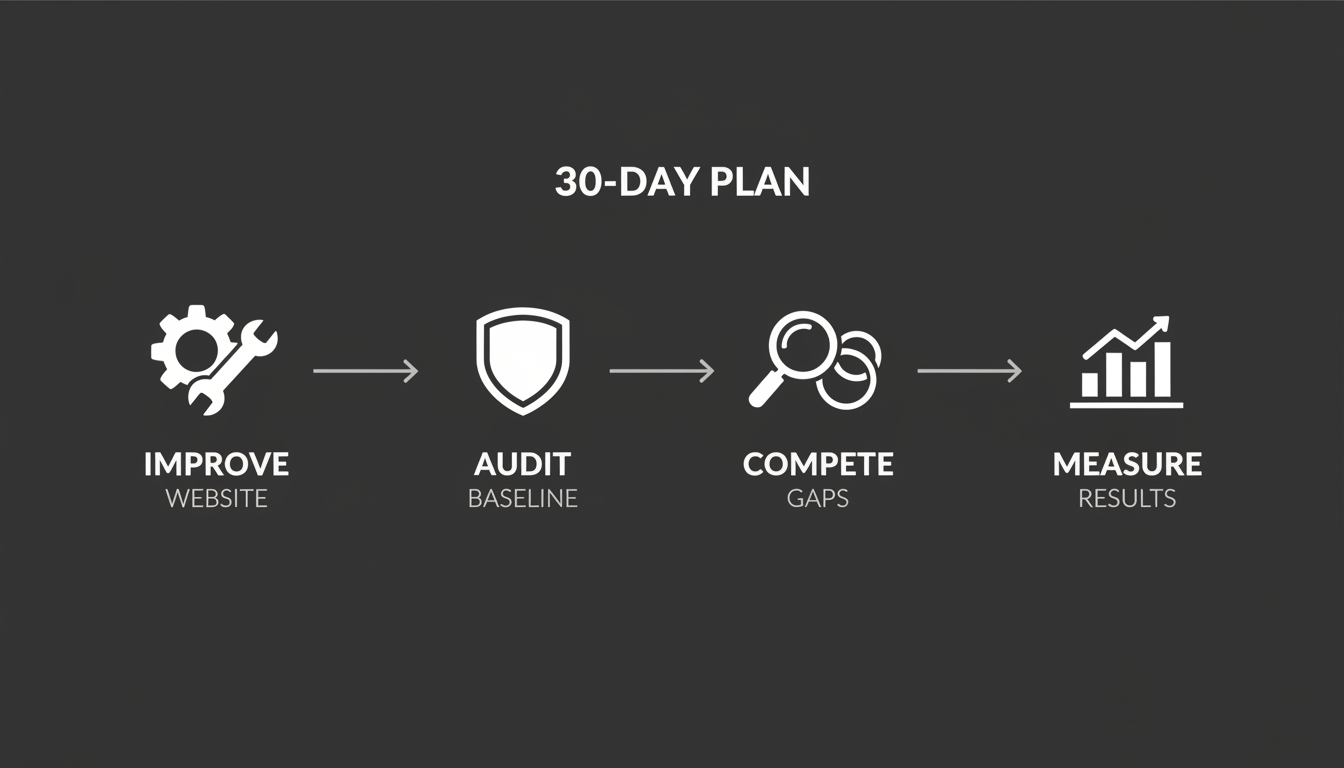
Days 1 through 3: Run the Website Optimizer
Start here. Not with the Brand Audit. Not with competitors.
Run the Website Optimizer on your top 20 pages: your homepage, main product or service pages, your About page, and your highest-traffic content. Why start here? Because if AI crawlers can't properly read your site, nothing else matters. You can have the best content in your industry, but if your robots.txt is blocking AI crawlers or you're missing schema markup, the models will never find it.
Take the files Akii generates and build them:
- Deploy the optimized robots.txt
- Upload the enhanced sitemap.xml
- Set up the /llms/ directory
- Add the schema markup packages to your key pages
If you have a developer, hand them the files. If you're doing it yourself, the three-phase roadmap tells you exactly what to do and in what order.
Days 4 through 5: Fix Your Brand Foundation
While the technical changes propagate, clean up your brand presence.
Start with your About page. AI models pull heavily from About pages when building brand knowledge. Make yours clear, factual, and structured. Say what you do, who you serve, and what makes you different. Skip the mission statement poetry.
Update your FAQ sections next. AI models respond well to structured Q&A content. If you don't have an FAQ page, build one. If you do, make sure it answers the questions your customers actually ask, not the ones you wish they'd ask.
Check your social profiles too. LinkedIn, Twitter, your Google Business Profile. Make them consistent with your website. AI models cross-reference these signals. If you have a Wikipedia page, review it for accuracy. If you don't and your brand qualifies, that's a longer-term project worth starting.
Days 6 through 7: Run Your First Brand Audit
Now that your technical foundation is cleaner, run the AI Brand Audit. This gives you a baseline score across all seven dimensions.
Write down your scores. Screenshot them. You'll want to compare these numbers in four weeks.
Pay attention to which AI models know about you and which don't. The model-by-model comparison is one of the most useful views in the platform. You might be well-known to one model and completely invisible to another. That tells you exactly where to focus.
What Should Week Two Look Like?
Monitor Your Scores Daily
After setting up technical changes, check your dashboard daily for the first week. You're looking for early signals that the changes are being picked up. Don't panic if scores don't move immediately. Do look for directional shifts.
Analyze Your Competitors
Now run Competitor Intelligence. You've got your own baseline. Time to see who you're actually up against.
Here's the question most people don't think to ask: who does AI recommend when someone asks about your category? It might not be who you expect. Brands that win in traditional search aren't always the ones AI models cite. Sometimes a smaller competitor with better-structured content and stronger authority signals gets the nod instead.
The gap analysis shows you exactly where competitors have an advantage and where you can close the distance fastest. Focus on the gaps with the highest impact and lowest effort first.
Test New Content
Take the content outlines from the Competitor Intelligence tool and publish one or two pieces. These aren't generic blog posts. They're structured to match what AI models are looking for when they build answers in your category.
Test the structure. See what moves your scores.
What Happens in Weeks Three and Four?
Week Three: Build Authority
Publish thought leadership content. Get quality backlinks from authoritative sources. Improve your product and service descriptions using the patterns you've learned from the first two weeks.
This is where the compound effect starts. Technical fixes make you crawlable. Structured content makes you citable. Authority signals make you trustworthy. AI models need all three working together.
Week Four: Measure and Adjust
Pull up your Brand Audit scores and compare them to your Week One baseline. Look at your overall AI Visibility Score, model-specific citation changes, competitor gap trends, and technical readiness improvements.
What worked? Do more of it. What didn't move? Investigate why. Set your priorities for the next month based on actual data, not assumptions.
How Do I Know If This Is Working?
Your primary metric is your AI Visibility Score. It's a 0-to-100 number that tells you how findable and citable your brand is across AI models.
Don't stop there, though. Track which specific models cite you and how often. Watch how your competitor gaps trend over time. Monitor your technical readiness score. Check your analytics for traffic from AI referral sources like chat.openai.com and perplexity.ai.
Set a cadence: weekly dashboard checks, monthly competitive reports, quarterly strategic reviews. AI models are constantly updating. Your visibility requires ongoing attention.
What Are the Mistakes That Will Cost You?
I've seen these patterns across hundreds of brands. Avoid them.
Blocking AI crawlers in robots.txt. This is the most common and most damaging mistake. Many default robots.txt configurations block the very crawlers AI models use to index your content. The Website Optimizer catches this immediately.
Missing schema markup. Schema is how you speak the language AI models understand. Without it, your content is unstructured text. With it, you're giving models clean, parseable data about your products, your organization, your FAQs, and your reviews.
Publishing thin or promotional content. AI models are trained to deprioritize content that reads like a sales pitch. Write for the person asking the question, not for your marketing team.
Ignoring what competitors are doing. If you're not tracking who AI models recommend in your space, you're refining in the dark. Competitor Intelligence exists for a reason.
Expecting instant results. Real impact takes four to eight weeks. Technical fixes get picked up relatively quickly. Content and authority signals take longer. Be consistent.
Where Should I Start Right Now?
If you haven't signed up yet, the free plan gives you 100 credits to test everything. That's enough to run a real audit and see exactly where you stand.
Already in? Here's your checklist for today:
- Run the Website Optimizer on your top 20 pages
- Launch the files it generates
- Run your first AI Brand Audit
- Write down your baseline scores
Don't try to do everything at once. Start with the foundation, measure your starting point, and build from there.
The brands that win in AI search won't be the ones with the biggest budgets. They'll be the ones that understood the shift early, built the right technical foundation, and kept showing up with credible, well-structured content.
You can explore all of Akii's tools on the features page, or read more about the AI search shift on the Akii blog.
The window is open. Most of your competitors haven't started. That's your advantage.