
Why AI Visibility Breaks Traditional Team Structures
Here's the problem most enterprises haven't named yet: AI visibility isn't a marketing problem. It's a governance problem. Almost nobody is treating it that way.
When a customer asks ChatGPT or Perplexity about your product category, the answer they get is shaped by your SEO content, your product docs, your press coverage, your executive quotes, your support forums, and a dozen other signals your teams produce independently. No single team controls what AI models say about you. But every team influences it.
That's a fundamentally different situation than anything enterprises are used to managing.
In traditional search, you could hand SEO to marketing and move on. Rankings were visible, measurable, mostly influenced by one team's work. AI answers don't work that way. They pull from everything, synthesize it, and they don't tell you which input shaped the output.
So what happens when SEO says one thing about your positioning, product marketing says another, and PR is pushing a third narrative? The AI model picks up all three. It blends them. The customer gets a muddled, sometimes contradictory answer about who you are and what you do.
No single owner means inconsistent AI perception. Fragmentation creates narrative drift that compounds over time.
This isn't hypothetical. It's already happening at most large organizations. They just don't have the instrumentation to see it yet.
The New Governance Problem in AI Search
Why does this matter more now than two years ago?
AI systems don't just index your content. They synthesize signals from everywhere your brand shows up. Structured data, unstructured mentions, third-party reviews, competitor comparisons, even how your APIs describe your own product.
The old model was simple: control your website, influence your search results. The new model is messier. Everything you publish, everywhere, becomes training signal or retrieval context for AI engines that millions of people now use to make decisions.
Internal inconsistency becomes external misinformation. Not because anyone is lying. Because different teams are telling different truths about the same company, and the AI has no way to reconcile them.
I've watched this pattern play out across multiple technology cycles. When a new channel emerges, the first instinct is to assign it to whoever seems closest. Social media went to marketing. Mobile went to IT, then product, then marketing. AI visibility is following the same path, bouncing between teams with nobody accountable for the whole picture.
But AI visibility is different in one important way. It can't be owned by a single function. The inputs are too distributed. The outputs are too unpredictable. And the stakes are too high to let it drift.
The risk isn't just brand confusion. It's that conflicting narratives across models become the default understanding of your company for an entire generation of users who trust AI answers more than they trust your homepage.
The 4 Functions That Now Shape AI Visibility
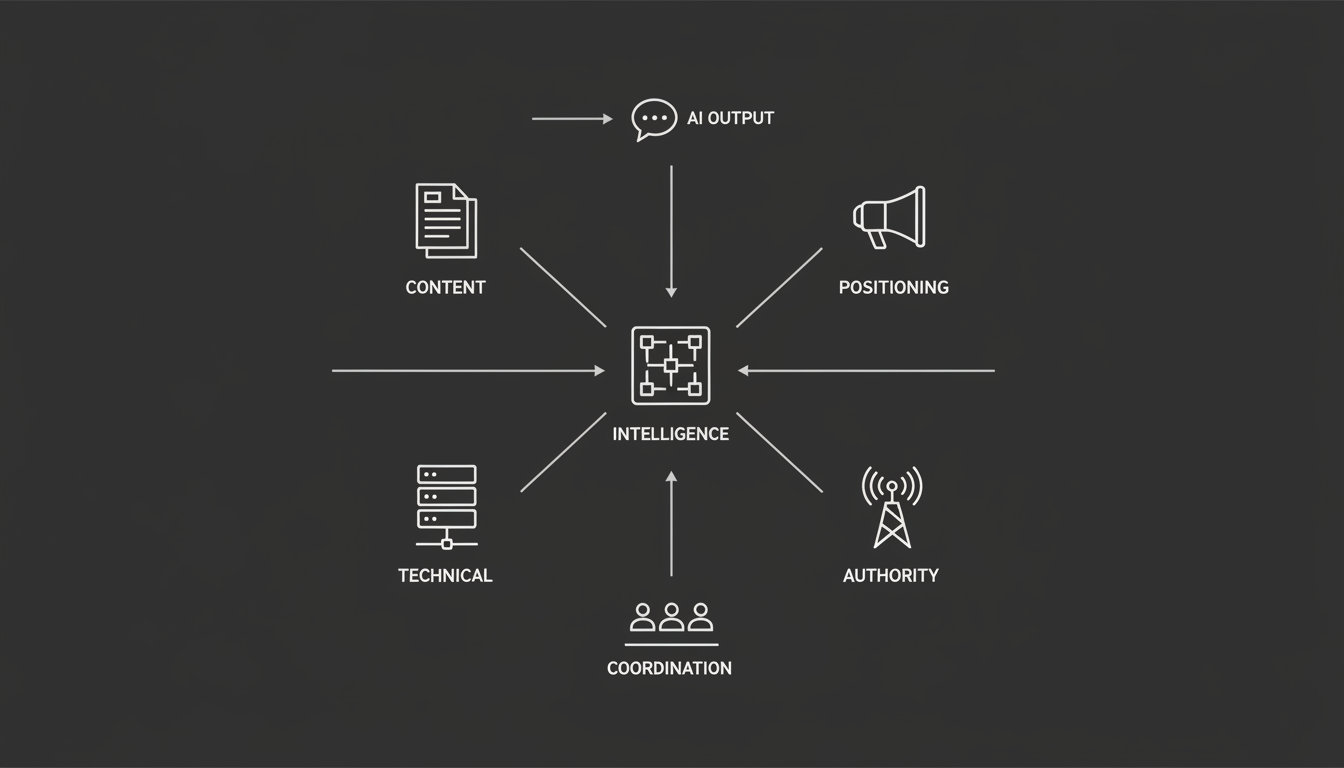
If you're trying to figure out where AI visibility actually lives in your org, start by mapping the functions that shape it. There are four, and they don't report to the same person.
Content and SEO: The Information Layer
This is where most enterprises start, because it's the most familiar. Your content team and SEO function produce the raw information that AI models are most likely to retrieve and reference. Blog posts, landing pages, knowledge bases, FAQ content.
What most content teams miss: AI models don't just care about keyword relevance. They care about entity clarity. If your content describes your company inconsistently across pages, the model inherits that inconsistency. It doesn't flag it. It just absorbs it.
Product Marketing: The Positioning Layer
Product marketing defines how you talk about what you do, who it's for, and why it matters. That positioning language ends up in decks, comparison pages, analyst briefings, and partner materials.
When product marketing and content aren't aligned on entity definitions, you get one version of your story on the blog and a different version in your product pages. AI models notice. They just don't tell you they noticed.
PR and External Authority: The Trust Layer
AI models weigh authority signals. Press coverage, expert citations, third-party endorsements. Your PR team influences these signals but rarely thinks about them in the context of AI retrieval.
A single high-authority article that frames your company differently than your own content can shift how AI models describe you. That's not a PR failure. It's a coordination gap.
Technical Infrastructure: The Accessibility Layer
Schema markup, structured data, API documentation, site architecture. Your engineering and technical SEO teams control whether AI models can even access and interpret your information correctly.
If your structured data contradicts your content, or if your technical setup blocks AI crawlers from key pages, it doesn't matter how good your positioning is. The model can't use what it can't reach.
Four functions. Four layers. Usually four different reporting lines. That's the governance problem in plain terms.
What an AI Visibility Governance Model Looks Like
So how do you actually coordinate this without creating another bureaucratic committee that meets monthly and accomplishes nothing?
It comes down to three structural elements. None of them require a reorg. All of them require someone with enough authority to connect the dots.
A Central Intelligence Layer
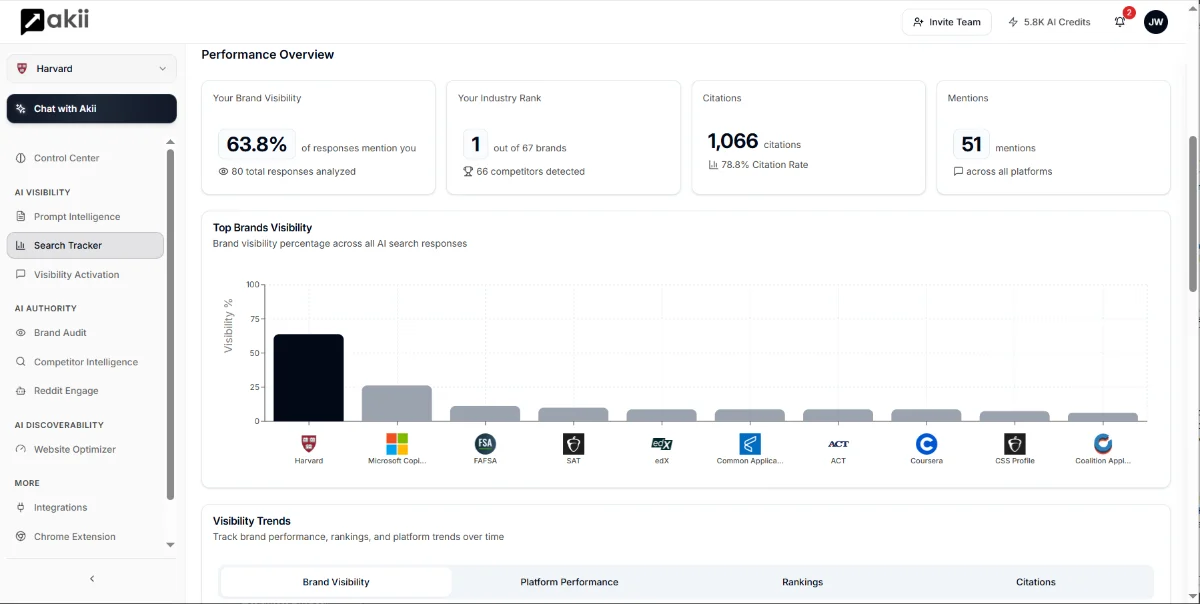
You need one place where the current state of your AI visibility is visible to all four functions. Not a dashboard that only marketing sees. Not a report buried in a quarterly deck. A shared, continuously updated view of how AI models are representing your brand right now.
This is what we describe as brand state snapshots. A point-in-time capture of what AI engines actually say about you, compared against what you intend them to say. When every team can see the same picture, alignment gets a lot simpler.
Without that shared view, every team optimizes in isolation. Isolated optimization is exactly how narrative drift happens.
Cross-Team Feedback Loops
The intelligence layer is useless without a mechanism for acting on it. You need short, regular feedback loops between the four functions. Not a standing meeting with 20 people. Something closer to a shared channel where discrepancies get flagged, discussed, and resolved within days, not quarters.
The AI visibility operating model we've written about describes this in more detail. The core idea is simple: treat AI visibility like a system with inputs from multiple teams, not a project owned by one team.
When product marketing updates positioning, the content team needs to know. When PR secures a major feature, the SEO team needs to understand how that coverage frames the company. When engineering changes the schema markup, everyone needs to understand the downstream effect.
These loops don't need to be heavy. They need to be fast and connected.
Standardized Entity Definitions
This is the most underrated piece. Every team needs to work from the same set of entity definitions. What is your company? What are your products? What categories do you compete in? What claims can you make?
If your product marketing team calls your platform "an AI-powered customer intelligence solution" and your content team calls it "a data analytics tool for marketing teams," you've just given AI models two different identities to choose from. They will choose. You won't like how.
Standardized entity definitions aren't a branding exercise. They're an AI visibility prerequisite. The model needs consistent signals to build a consistent representation, and consistency starts with agreement on the basics.
Why "Ownership" Is the Wrong Concept
I've been in enough enterprise strategy conversations to know the first question is always: "Who owns this?"
For AI visibility, that's the wrong question. Asking it will slow you down.
Here's why. Visibility in AI systems is emergent. It's not something you produce directly. It emerges from the combined effect of everything your organization puts into the world. You can't own an emergent property. You can only coordinate the inputs that shape it.
When you assign ownership, you create a single point of accountability for something no single person or team can actually control. The "owner" either becomes a bottleneck, trying to approve everything that touches AI visibility, or a scapegoat, blamed for outcomes they can't influence.
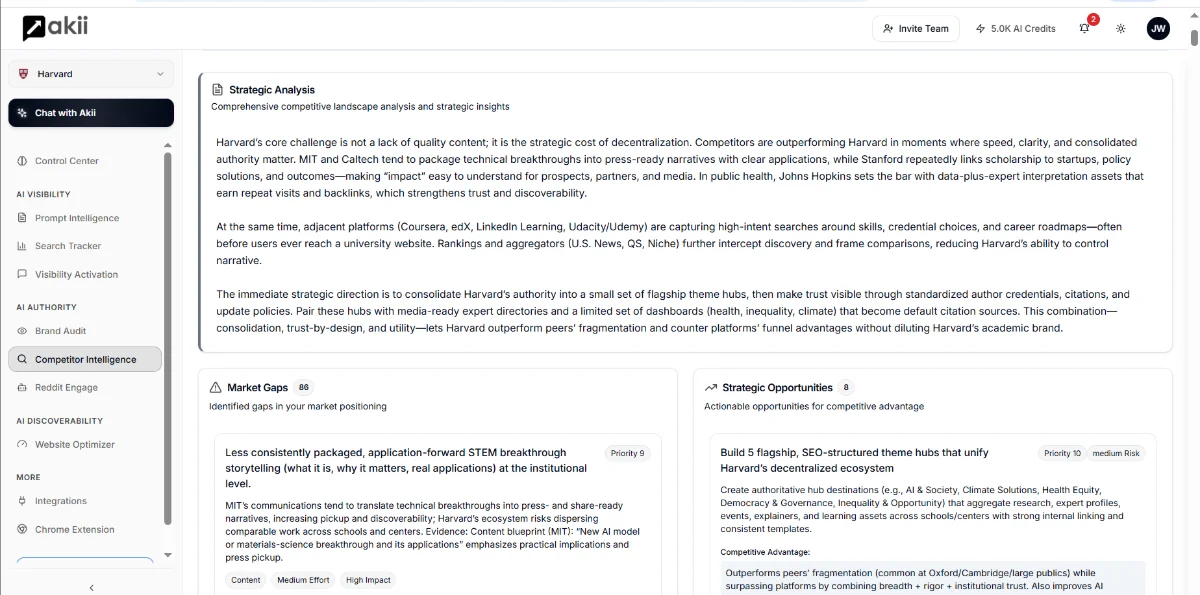
Coordination is the better model. One team or function holds the intelligence layer and facilitates alignment. But every team stays responsible for their own inputs. The goal isn't control. It's coherence.
That distinction matters. Control assumes you can dictate what AI models say about you. You can't. Coherence assumes you can make your inputs consistent enough that the AI's synthesis reflects your actual identity. That's achievable.
You don't own your reputation. But you can coordinate the signals that shape it.
Where This Goes in 2026
The enterprises that figure this out in the next 12 to 18 months will have a structural advantage. Not because they'll have perfect AI visibility. Because they'll have the organizational muscle to detect problems, coordinate responses, and adapt faster than competitors still arguing about which team should "own AI."
A few patterns I expect to see:
AI visibility will get a seat in governance structures. Not as a new department, but as a cross-functional concern with explicit accountability. Similar to how data governance evolved from "IT's problem" to a shared organizational responsibility.
Tooling will shift from single-team to multi-team. Most current tools are built for marketers. The next generation needs to serve product, PR, engineering, and leadership simultaneously. That's a design challenge, not just a feature list. It's part of why we built Akii as a brand intelligence layer rather than another marketing dashboard.
Entity management will become a discipline. Right now, most companies manage their brand guidelines in a PDF that nobody reads. In 2026, managing how AI models understand your entities will be as important as managing your visual identity. Probably more important, because AI answers reach people before your website does.
The gap between coordinated and uncoordinated companies will become visible. When one company shows up consistently and accurately across AI engines and a competitor shows up with conflicting or outdated information, users will notice. They might not know why one feels more trustworthy. But they'll act on that feeling.
The Practical Starting Point
If you're reading this thinking "we're nowhere close to this," that's fine. Most enterprises aren't. But the starting point is simpler than the full governance model.
Answer two questions first.
What do AI models currently say about your company? Not what you think they say. What they actually say, across ChatGPT, Perplexity, Gemini, Claude. Check it. Write it down. Then look at where the inconsistencies are between what different teams are putting into the world. Compare your product pages, your blog, your press coverage, and your technical documentation. Look for entity conflicts.
Then ask who in your organization has the cross-functional visibility to spot these gaps. If the answer is nobody, that's your first hire or your first internal mandate.
You don't need a perfect governance model to start. You need shared awareness and a willingness to coordinate. The model will build from there.
AI visibility governance isn't a 2026 aspiration. It's a 2025 problem that most enterprises haven't recognized yet. The ones that do will spend the next year building coordination muscle. The ones that don't will spend 2026 wondering why AI models keep getting their story wrong.
The inputs are already distributed across your org. The question is whether you'll coordinate them on purpose, or let AI models figure it out on their own. I know which bet I'd make. You can explore how Akii helps with this at akii.com/features.