
Why Clients Will Start Asking for AI Visibility
Your clients won't ask for this the way they asked for SEO ten years ago. They won't use the right terminology. No RFP is coming with "AI visibility" in the subject line.
What they'll do is call you and say something like: "I asked ChatGPT about our product category and we didn't come up. Our competitor did. What's going on?"
That's the opening. If you're not ready with a service when that call comes, someone else will be.
Here's what's actually happening. A growing share of product research, vendor evaluation, and purchase decisions now runs through AI-driven discovery. People ask ChatGPT, Perplexity, Gemini, and Copilot questions they used to type into Google. The answers aren't a list of ten blue links. They're direct recommendations, often just one or two brands mentioned by name.
That changes the game for every agency selling digital marketing services. Because the question your clients will eventually ask isn't "are we ranking?" It's "are we being recommended?"
Most agencies can't answer that yet. Which makes it a question worth building a service around.
What Does an AI Visibility Service Actually Include?
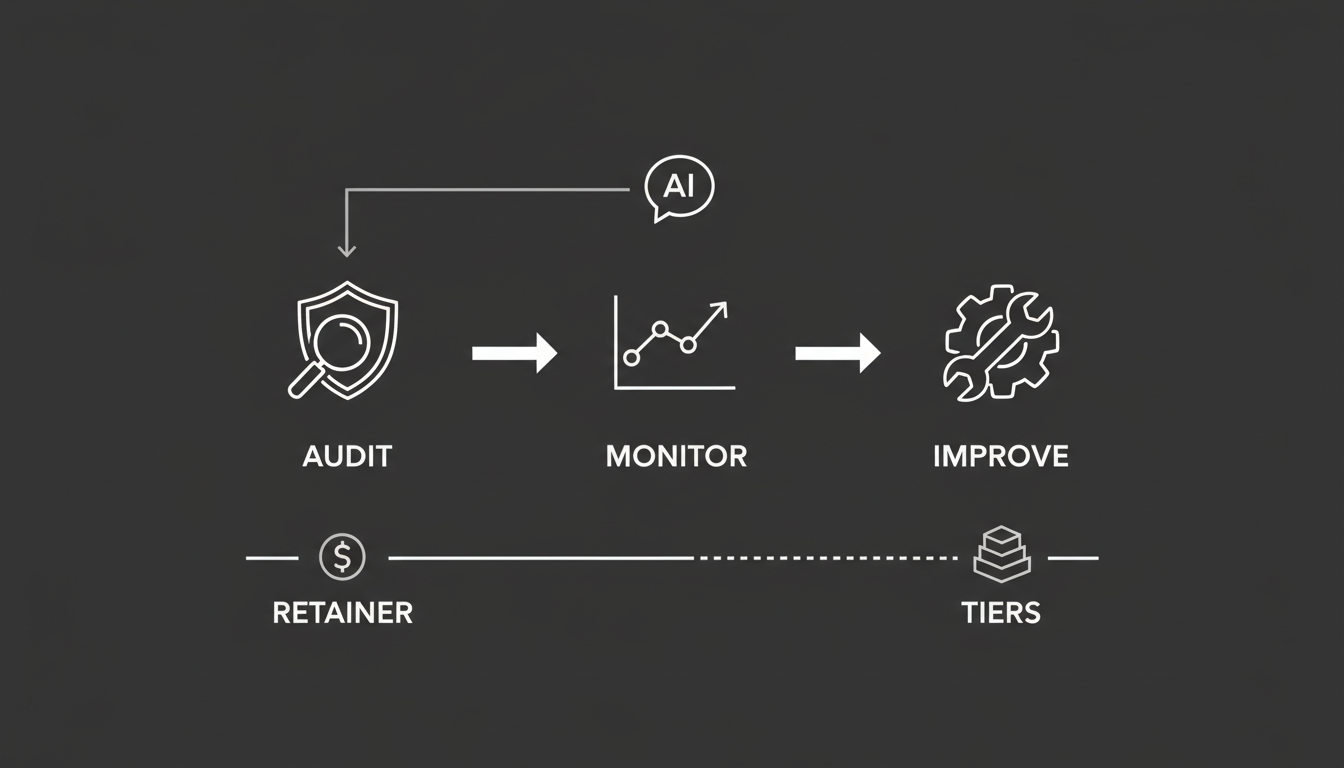
If you're going to sell this, you need to know what's inside the box. It breaks down into three layers.
Monitoring. You need to know how AI engines are currently representing your client's brand. What happens when someone asks ChatGPT "what's the best project management tool for agencies" and your client sells exactly that? Do they appear? Are they described accurately? Are they mentioned alongside the right competitors, or the wrong ones?
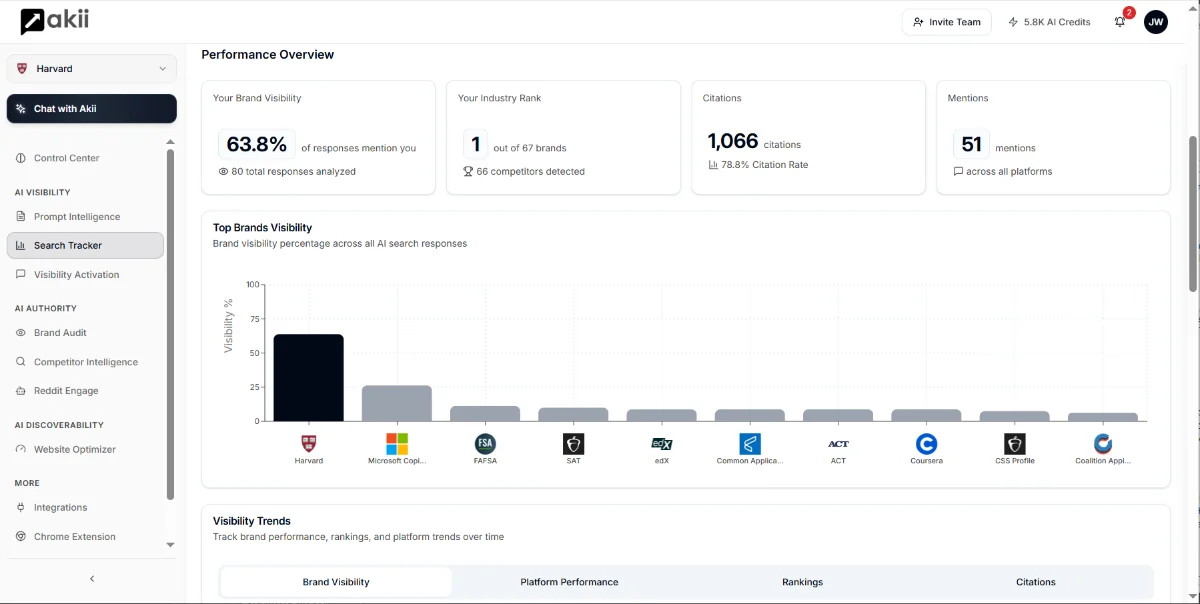
You can't check this manually once a quarter. AI outputs shift constantly, and you need a system that tracks it over time. Tools like the Akii AI Search Tracker exist specifically for this.
Reporting. Monitoring without reporting is just data hoarding. Clients need to see what's happening in a format they actually understand. Where they appear, where they don't, how they're described, how that compares to competitors. The reporting layer is where you prove value and justify the retainer.
Optimization. This is where the real work lives. Once you know how a brand is being represented in AI answers, you can start influencing it. Better structured data, adjusted content strategies, fixing factual inaccuracies in the sources AI models pull from, building the authority signals that make a brand more likely to get cited.
If you've sold SEO before, the structure feels familiar: monitor, report, improve. But the inputs and outputs are completely different. The AI Visibility Operating Model lays out this framework in more detail.
How Do You Package This for Clients?
Packaging matters more than most agencies realize. You can have the right capabilities and still lose the deal if the offer structure doesn't match how clients buy.
Start with an audit. Every engagement should open with a one-time AI brand audit. It gives the client a clear picture of where they stand today. It also gives you something concrete to sell before asking for a monthly commitment.
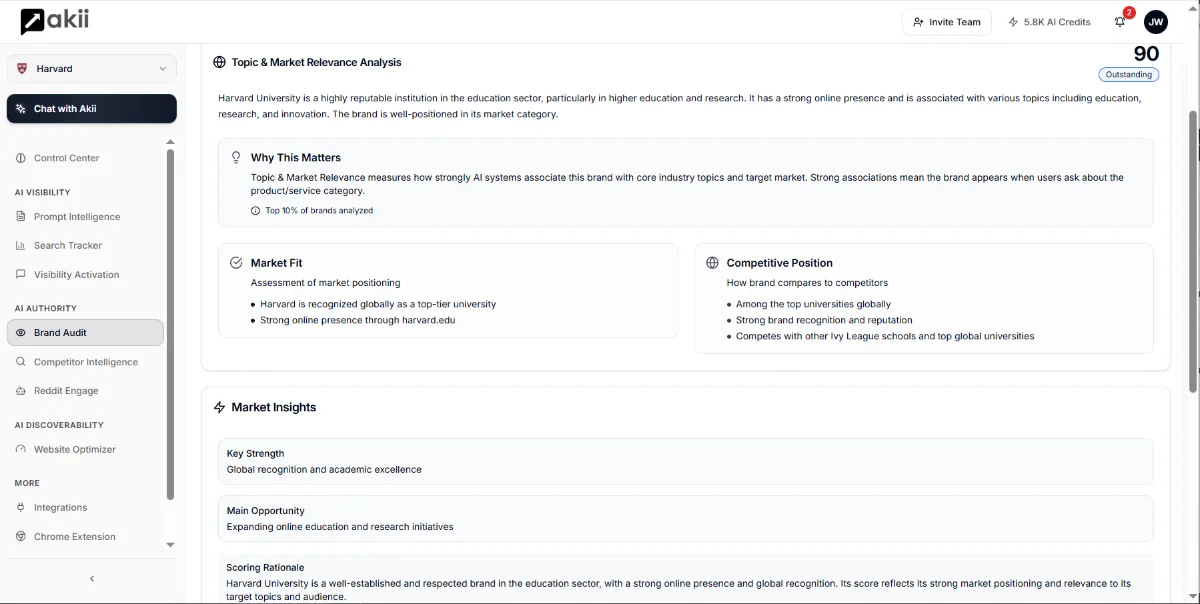
An AI Brand Audit answers the questions clients are already wondering about: Are we showing up? What are AI engines actually saying about us? Where are the gaps?
The audit gets you in the door. It also makes everything that follows feel necessary rather than optional.
Then move to ongoing monitoring. After the audit, the next step writes itself. "We found these issues. Here's how we track and fix them month over month." That's an easy conversation when the audit has already surfaced real problems.
Set a reporting cadence that matches the client's decision cycle. For most mid-market clients, monthly works. For enterprise accounts or highly competitive categories, biweekly or weekly snapshots might make more sense. Don't over-report. Report at the frequency where the data actually changes enough to matter.
The core principle here: make the first step low-commitment and high-insight. Make the ongoing service feel like the obvious continuation.
I've built and sold services across enough cycles to know that pricing is where agencies either capture real margin or leave it on the table. AI visibility is a new category, which means you have more pricing freedom than you might think.
Two models work well.
Retainer model. A flat monthly fee covering monitoring, reporting, and a defined scope of optimization work. Simplest structure, and the one most clients prefer. Predictable for both sides. For most agencies, starting in the range of what you'd charge for mid-tier SEO services makes sense, then adjusting based on the complexity of the client's competitive space.
The margin here is strong. Tooling costs are relatively low compared to traditional SEO platforms. The expertise required is real but learnable. And the number of agencies offering this is still very small.
Tiered service model. If you want to serve a wider range of clients, build tiers. A basic tier might cover monitoring and monthly reporting only. A mid tier adds optimization recommendations. A top tier includes hands-on implementation plus more frequent reporting.
Tiers work especially well when you're selling to a mix of small businesses and larger accounts. They let you say yes to more clients without custom-scoping every deal.
One thing I'd avoid: don't price this as an add-on to an existing SEO retainer. That positions it as a minor feature instead of a standalone service. AI visibility is its own category. Price it that way.
Why This Is a Real Differentiator, Not Just a New Line Item
Most agencies are still competing on the same set of services they've offered for a decade. SEO, paid media, content, social. The capabilities are real, but the differentiation is thin. When every agency offers the same menu, the only variable left is price.
AI visibility breaks that pattern.
Right now, very few agencies can answer the question "how does your brand show up in AI-generated answers?" Even fewer can do anything about it. That gap is your opportunity.
Think about what happened with SEO in the mid-2000s. The agencies that moved early didn't just add a service. They built reputations, attracted clients who wanted to work with the people who understood the new thing, and commanded premium pricing because supply was low and demand was growing fast.
We're in that same window with AI visibility. The difference is it will close faster. AI adoption is moving quicker than search engine adoption did. The agencies that build this capability in 2025 will have a meaningful head start over those who wait until 2027.
Here's the part that matters most for your positioning: this isn't about chasing a trend. It's about recognizing a structural shift in how people find and evaluate brands. AI-driven discovery isn't replacing traditional search overnight, but it's growing fast enough that ignoring it is a real risk for your clients.
When you can walk into a pitch and say "we track and improve how your brand appears in AI-generated recommendations, and here's what we found in your audit," you're having a conversation nobody else in the room is having.
That's not a gimmick. That's a new category.
The Practical Next Step
If you run an agency and you've read this far, here's what I'd actually do.
Pick three clients. Run an AI Brand Audit for each of them. Show them what you find. Don't pitch anything yet. Just show them the data.
I've watched this play out enough times to know what happens next. The client sees a gap they didn't know existed. They ask what can be done about it. Now you're not selling a service. You're solving a problem they just saw with their own eyes.
That's how you build a new service line. Not with a pitch deck. With proof.
The agencies that move on this now won't just add revenue. They'll build a practice that compounds over time as AI-driven discovery becomes the default way people find products, services, and brands. The economics are strong. The competition is thin. And the client need is already showing up in conversations, even if nobody's calling it by name yet.
Build the service. Price it with confidence. Be the agency that answers the question before the client finishes asking it.