Why AI Search Is Becoming the First Step in B2B Buying
The Evolution of B2B Research
For roughly 20 years, the B2B buying process followed a pattern most of us could sketch from memory.
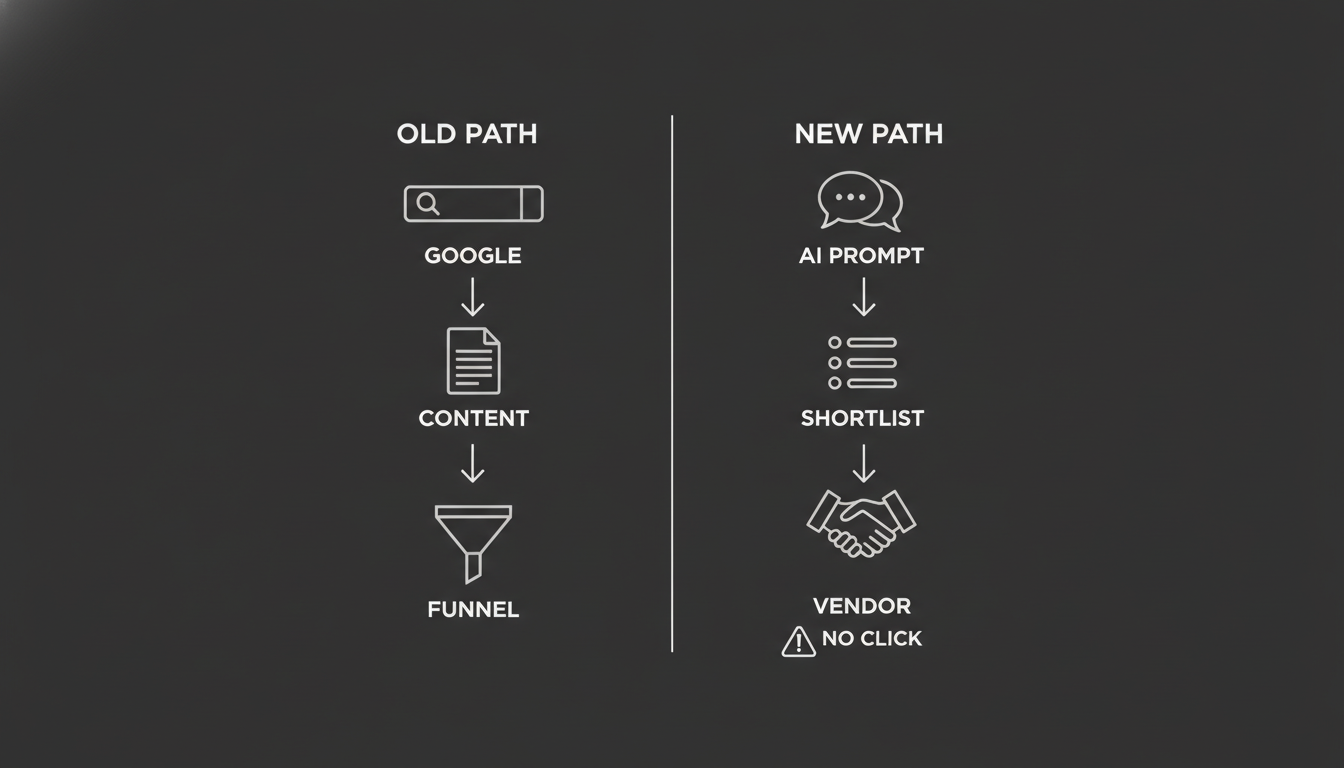
A buyer had a problem. They opened Google. They typed something like "best CRM for mid-market companies" or "how to automate invoice processing." They clicked a few results, skimmed some blog posts, maybe downloaded a whitepaper. Eventually they landed on a shortlist of vendors and started talking to sales.
The entire discovery layer was built on content. SEO, paid search, gated assets, retargeting. If your brand showed up on page one, you had a shot. If it didn't, you were invisible.
Marketing teams got very good at this game. They built content engines, optimized for keywords, tracked rankings, and measured pipeline by source. The model worked because the buyer's research path was visible. You could see the clicks, the page views, the form fills. You could trace revenue back to a blog post or a search ad.
That model is breaking. Not slowly. Quickly.
What Changed With AI-Assisted Research?
Here's what I've been watching closely over the past 18 months.
A growing number of B2B buyers are starting their research not in Google, but in ChatGPT, Gemini, or Perplexity. They're asking questions like "What are the top platforms for AI-powered customer support?" or "Compare Vendor A and Vendor B for enterprise deployment." And they're getting direct answers. Not ten blue links. Answers.
This is a different kind of research behavior. The buyer isn't browsing. They're asking. The AI responds with structured recommendations, comparisons, and shortlists, no clicks required, no websites visited, no form fills.
Think about what that means for a B2B marketing team that has spent years improving for search traffic. The buyer might form a strong opinion before they ever touch your website.
This isn't theoretical. It's already happening. The question isn't whether AI search will matter for B2B buying. It's whether your brand is showing up in those AI-generated answers right now.
How Do AI Engines Actually Shortlist Vendors?
This is where most marketing teams haven't done the work yet.
When a buyer asks ChatGPT or Perplexity to recommend a solution, the AI doesn't just repackage search results. It draws from training data, retrieval-augmented sources, and whatever context it can assemble about the query. It synthesizes. It ranks. It recommends.
Two prompt patterns matter most for B2B.
Comparison prompts. "Compare X and Y for use case Z." The AI produces a structured breakdown covering features, pricing models, and relative strengths. If your brand isn't in the comparison, you don't exist in that buyer's consideration set.
Recommendation prompts. "What's the best tool for [specific problem]?" The AI returns a shortlist, usually three to five names. If you're not on it, you've lost before the funnel even starts.
What determines whether you show up? No single factor drives it. It's a mix of how often your brand appears in training data, how clearly your positioning is articulated across the web, how much third-party validation exists in the form of reviews and mentions, and whether your content is structured in ways AI can parse and reference.
The old SEO question was "Do I rank on page one?" The new question is "Does the AI mention me at all?"
Why Do Invisible Brands Lose Before the Funnel Starts?
I've seen this pattern before. Not with AI specifically, but with every major shift in how buyers discover products.
When Google became dominant, companies that didn't invest in search lost ground to competitors who did. Not because their product was worse. Because they weren't visible at the moment of intent. The same thing is happening now with AI search, except the stakes are higher because the buyer's shortlist is being formed in a single prompt, not across a dozen clicks.
Here's what should concern every B2B marketing leader: this is pre-selection. The buyer has already narrowed their options before they visit your website, read your case studies, or talk to your sales team. If the AI didn't include you, there's no retargeting pixel to fire. No content to serve. No second chance.
Credibility signals matter more in this context, not less. Is your brand mentioned in industry publications? Do customers reference you in reviews? Is your product described clearly and consistently across sources AI engines can access? These signals aren't new, but their importance has shifted. They're no longer just trust builders for human readers. They're inputs to the AI's recommendation logic.
The brands that win in this environment are the ones that are visible, specific, and well-referenced across the sources AI engines rely on. The ones that lose are still measuring success purely by website traffic and keyword rankings.
What Does This Mean for Marketing Teams Right Now?
Two things need to change in how B2B marketing teams think about their work.
Visibility before traffic. For years, the goal was to drive traffic to your site and convert it. That's still important. But there's now a layer that sits before traffic, a layer where AI engines are forming opinions about your brand and presenting those opinions to buyers. If you're not tracking what AI says about you, you're missing the earliest and possibly most influential moment in the buyer's journey.
This is exactly why AI visibility is becoming a revenue signal. It's not a vanity metric. It's a leading indicator of whether you'll even make the shortlist.
Influence before attribution. Most marketing attribution models are built around clicks, sessions, and conversions. They can't see what happened inside a ChatGPT conversation. They can't measure whether Perplexity recommended you or your competitor. This blind spot grows larger every quarter as more buyers shift to AI-assisted research.
You can't attribute what you can't see. But you can monitor it.
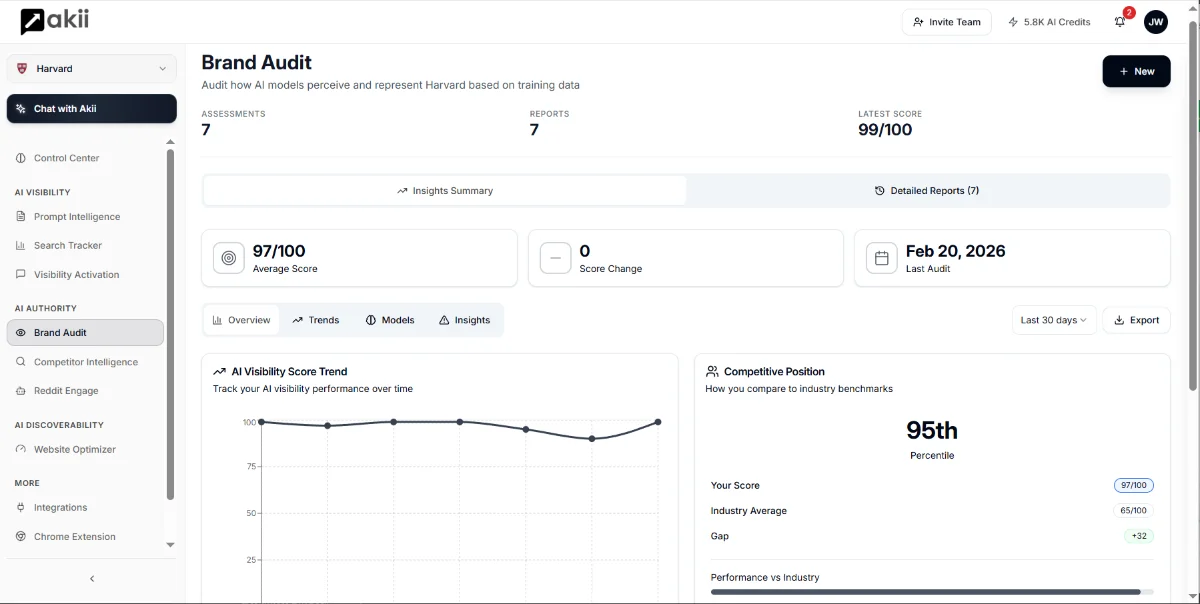
That's why we built the AI Brand Audit and AI Search Tracker at Akii. Not to replace your existing analytics, but to show you what's happening in the layer your current tools can't reach. How are AI engines describing your brand? Are you being recommended? For what use cases, and against which competitors?
These aren't nice-to-have questions anymore. They're strategic.